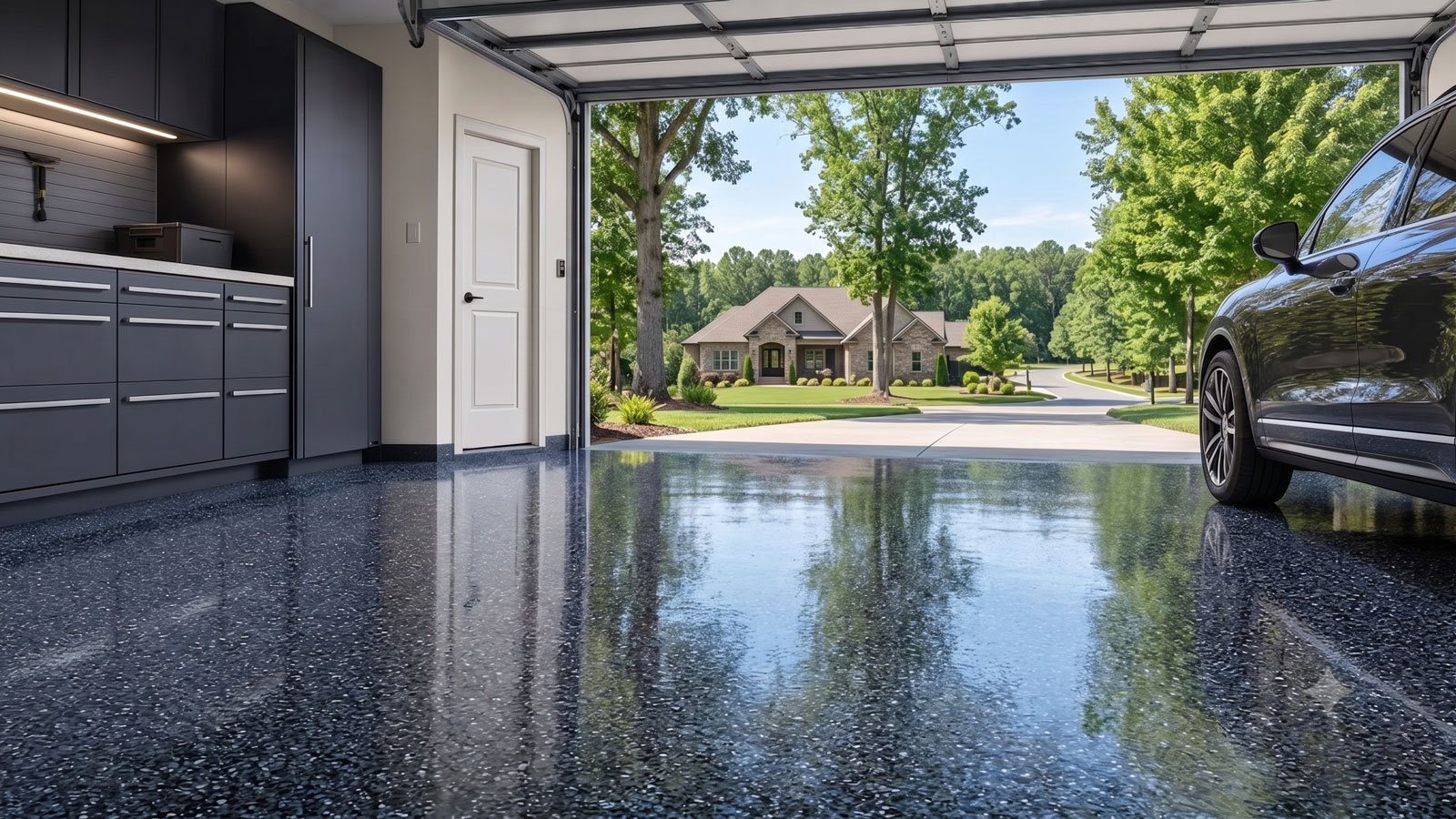
Garage Floor Coating in Toms River, NJ
Floor Coating Services in Toms River, NJ
Toms River Township's approved Municipal Stormwater Management Plan divides the area into named drainage basins. Long Swamp Creek is described as one of the most intensely developed watersheds contributing to Barnegat Bay, while the broader Toms River basin is often described at approximately 192 square miles. These figures offer a locally specific reason to evaluate runoff, but neither the watershed size nor the creek's development level establishes moisture under any homeowner's garage concrete.
The township's current stormwater portal publishes a 2020 MS4 outfall-and-infrastructure map, an approved management plan, and stormwater ordinances updated in May 2025. A homeowner considering a garage-floor finish should distinguish the private driveway-to-door water path from the public outfalls and observe whether old floor paint, oil contamination or cracks affect the slab. A decorative coating cannot correct exterior grading or redirect a creek.
Ocean County garages also encounter winter deicing residue brought in on vehicles, plus coastal-season rain and hot tires. NJDOT uses salt, brine and calcium chloride; these materials should be removed from existing concrete before coating and routinely cleaned afterward. Compare epoxy and polyaspartic by actual product layers, surface profile, movement-joint treatment, sunlight at the door, traction and time until vehicles can return.
Local Market Insight
Toms River's municipal plan describes Long Swamp Creek as a heavily developed Barnegat Bay contributor and the larger Toms River basin as about 192 square miles; its updated stormwater portal offers a 2020 MS4 map and May 2025 ordinances. These facts inform private threshold and cleanup questions, not universal concrete-moisture diagnoses.
What Affects the Cost of Garage Floor Coating in Toms River?
Toms River's creek-and-bay drainage is relevant to how owners investigate outside water at a garage, not evidence that a resin product will be required for all slabs. A quote should identify the actual water path at the doorway and distinguish it from winter grit or paint on the floor.
The township's drainage plans and 2025 ordinances govern runoff systems. For a garage finish, price the concrete work separately: removal of old floor products, repairs, joints, mechanical profiling, edges and the manufacturer's installation and cure requirements.
The size of the garage matters, but so do the condition of the concrete, the amount of preparation needed, and the type of coating or finish selected. The published range is $6–$12/sq. ft.; a typical two-car garage is commonly $3,000–$5,500 when the actual floor and scope are considered.
- Long Swamp Creek development: Township planning describes this basin as heavily developed and contributing to Barnegat Bay. Runoff mapping should prompt driveway checks, not a default claim of slab moisture.
- Toms River's 192-square-mile basin: A large watershed is a municipal drainage fact; private floor coating still requires actual observations of persistent dampness, threshold flow and previous finish failure.
- 2020 MS4 infrastructure mapping: The township publishes public outfall and infrastructure maps. They cannot determine whether an owner's particular garage door line remains dry after storms.
- Existing coats and concrete repair: Garage-floor paint, oil, patched areas and weak concrete may need removal, grinding and repair before resin can bond reliably.
- NJDOT winter treatment: Salt, brine and calcium chloride may be tracked in with slush. They create contamination-removal and later housekeeping tasks distinct from stormwater flooding.
- UV, access and timing: A sun-exposed threshold, steps, cabinets, joint transitions and vehicle-return schedules change the work even on two garages with equal area.
Call for a clear, project-specific estimate—or request one online.
Long Swamp Creek, Barnegat Bay, and the Toms River Garage Threshold
Toms River Township's Municipal Stormwater Management Plan describes its drainage system in several watersheds. Among them, Long Swamp Creek is identified as a particularly intensively developed watershed draining toward Barnegat Bay. The broader Toms River watershed is described at about 192 square miles, showing the scale at which public planning operates.
Those named creek and basin figures are useful for distinguishing local hydrology from generic coastal copy, but an individual garage can be dry even within a heavily developed watershed. The correct practical check is whether pavement slopes toward the garage entrance, water crosses the sill after a rainstorm, and old coatings have failed in patterns that point to a real problem.
Where a driveway or low apron channels water into a garage, exterior work may be necessary; adding a decorative resin coating is not a drainage fix. Conversely, ordinary puddles left by wet vehicles are typically a cleaning concern, not proof of water vapor rising from a slab.
Ask the floor-coating contractor to itemize old-coating removal, mechanical profiling, stable crack repairs, movement joints and edge work separately from drainage recommendations. This lets a homeowner compare legitimate floor preparation without paying for an inferred treatment based only on watershed statistics.
Toms River's 2025 Stormwater Program and Winter Garage Wear
The township makes an approved stormwater plan, a 2020 MS4 infrastructure map and updated May 2025 stormwater ordinances available through its official website. These documents cover public drainage and pollution prevention, and they are distinct from a manufacturer's installation specification for a garage floor.
New Jersey's winter roadway maintenance uses salt, brine and calcium chloride. In an Ocean County garage, gritty meltwater and road residue may accumulate around vehicles; existing deposits should be removed before grinding and a finished surface still needs cleaning according to its maintenance instructions.
Older or modified Toms River garages may contain floor paint, oil staining, previous patching, concrete repairs or dissimilar pours. A project-specific inspection should identify the necessary mechanical profile and whether existing layers must be fully removed rather than coated over.
Consider sun exposure near open doors, vehicle hot tires, desired texture, storage clearance and how soon cars must return. Actual material data, repair scope and cure conditions should drive epoxy-versus-polyaspartic comparisons, not broad claims that every bay-area garage has the same moisture problems.
Frequently Asked Questions
Does Toms River's Long Swamp Creek planning imply my garage has slab moisture?
No. The municipal plan describes basin runoff and development. An installer must inspect the concrete and the actual driveway threshold before attributing an indoor floor problem to drainage or vapor.
Why does the township publish a 2020 MS4 map?
It documents the public stormwater system. It cannot tell you the mechanical profile needed to bond a coating to a private garage or whether an individual apron is low.
Can a garage coating repair frequent driveway flooding?
No. A coating can help with routine cleaning once installed correctly, but ongoing exterior water flow needs its own drainage assessment.
How should winter salt be handled on garage concrete?
NJDOT salt and brine residue should be removed during preparation and cleaned periodically from a finished floor. A resin coating is not maintenance-free.
What belongs in a Toms River coating quote?
Old-finish removal, concrete grinding, repairs, control joints, threshold and edge work, named resin layers, sun exposure, traction and realistic vehicle-return timing.
Toms River Neighborhoods & Local Context
Phone Quote Line
Talk through your garage, coating options, and a realistic estimate range.
(732) 451-3277Typical Project Cost
$3,000–$5,500
Typical range for a two-car garage. Final pricing depends on floor size, concrete condition, prep work, coating type, and finish options.
Helpful Guides
Other Service Areas